.png)
Overlanding Meal Preparation - Top Tips from the road

Overlanding: Meal Preparation
Food and meal times are a big part of any overland trip; and when it’s done right, it becomes one of the highlights!
It’s not just about eating, it’s one of the few times in the day where everyone comes together, slows down, and chats about the day’s adventures before another wonderful evening around the fire. With a cold beer or glass of wine, mealtimes become a really enjoyable part of the experience.
Over the years, I’ve seen what works, what doesn’t, and how much of a difference a bit of organisation makes.

How we work
We keep things simple and straightforward. Most meals are prepared using:
Gas cookers / reliable, quick, and easy to use
BBQs / great for evening meals, very relaxed, and a big part of the camp experience
Gas cookers are what we use day to day. They’re efficient whether you’re boiling, frying, or cooking a full meal.
BBQs are a great option in the evenings and add to the experience cooking outside in camp.
Keep it efficient, manageable, and enjoy the process.
Top tip: Don’t overcomplicate meals. After a long day, simple food done well is always better than something ambitious.

Food and setup on arrival
Before you even arrive in country, Haley and I have already taken care of the basics.
We purchase at least the first 5 days of food before you arrive, and then resupply as we go along the route.
When you receive your vehicle, your food is already there and ready for you.
Each vehicle is also set up with:
You will have a good sized fridge for fresh items
Plenty of storage compartments designed specifically for food and cooking equipment
So everything has its place, and you can stay organised from the start.
Top tip: Keep one box or bag just for “daily use/ on the road” food (crisps, nuts, cereal bars, snacks, fruit etc). This prevents you unpacking the vehicle every time.
What’s provided in each vehicle
We make sure everyone has everything they need to prepare meals properly. You won’t need to bring any of your own cooking equipment.
Cooking Equipment
Gas cooker and fuel
Pots and pans
Kettle
Cooking utensils
BBQ Equipment
BBQ grill
Tongs and BBQ utensils
Basic fire/cooking setup where appropriate
Eating Equipment
Plates, bowls, cups
Knife, fork, spoon for each person
Preparation Equipment
Chopping boards
Sharp kitchen knives
Washing up bowls
Dish cloths / scourers
Washing up liquid
Food Basics Provided
Fresh meat
Fresh vegetables
Fresh fruit
Salad items
Eggs, milk, bread rolls
Snacks for the road
A selection of sauces (ideal for pasta and one pot meals)
…and plenty more, you won’t go hungry!
Top tip: Plan your meals around what will go off first. Chicken, fresh meat, and softer veg should be used early on. Leave things like pasta, rice, and tins for later in the trip.

Breakfast - Keeping it simple
Mornings tend to start early'ish, so breakfast works best when it’s straightforward.
Typical options:
Cereal
Toast
Fresh fruit
Tea and coffee
If there’s time, some people do a cooked breakfast or bacon sandwich, but generally:
Simple breakfasts make for smoother mornings.
Top tip: Get your lunch prepped at dinner or breakfast time. Once you’re on the road you won’t want to start making it from scratch.
Lunch - Keeping it practical
Lunch is usually on the move or between activities, so it needs to be quick and easy.
Typical lunches:
Sandwiches or wraps
Salad
Fruit
Leftovers from the night before
Preparing lunch in the morning saves time and keeps things running smoothly.
Top tip: When I’m boiling water in the evening for pasta, rice or tea, I always hard boil a few eggs for lunch the next day.
Dinner - The main meal
Dinner is when groups have more time to cook properly and enjoy it.
Typical meals include:
Pasta dishes
Stir fry
BBQ meals
One pot meals like stews and curries
Top tip: Use one pot meals whenever you can. Less washing up, quicker cooking, and much easier when you’re tired, and very tasty.
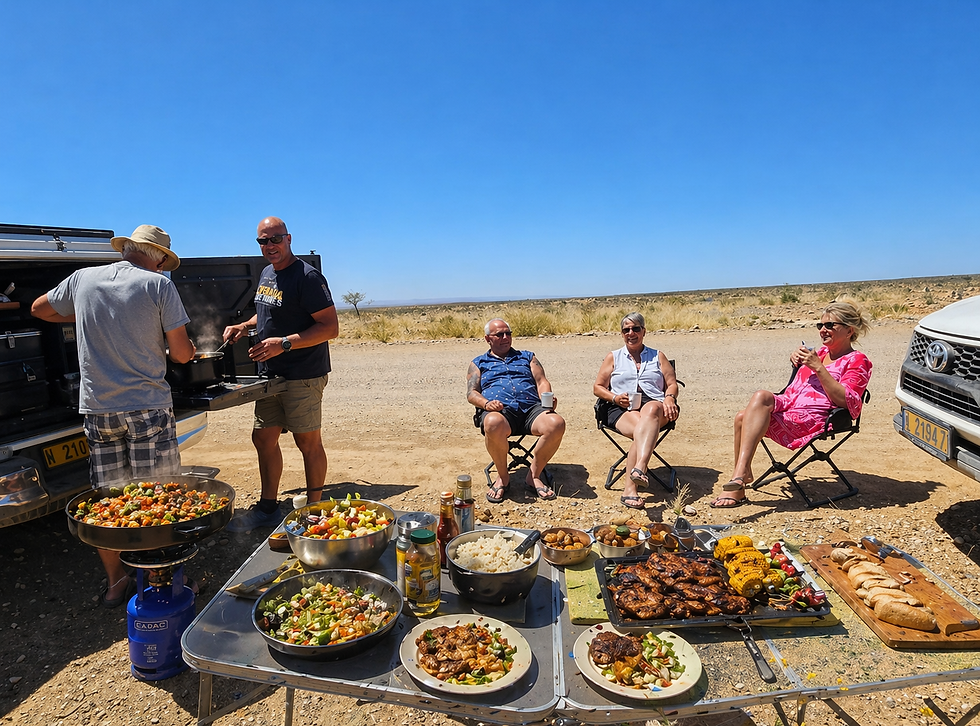
BBQ ideas that work well
BBQs are always a highlight when groups make the most of them.
Simple options that work well:
Burgers and wraps with salad
Chicken skewers with veg
Sausages with simple sides
Grilled vegetables are easy
Steak or chicken with a basic marinade
The best BBQ meals are:
Simple to prepare
Easy to cook for a group
Minimal washing up
Top tip: Keep a head torch handy when cooking in the evening.
Other Top Tips we’ve learned along the way
A few things consistently make a difference:
1. Organisation makes everything easier
Have a clear plan for your vehicle: Who’s cooking, prepping, and washing up.
2. Keep meals simple
Simple food, done well, always works best.
3. Work together
The best teams share the workload and get involved. Something you can chat about and plan during the days drive.
4. Stay on top of cleaning
A clean camp is a happy camp, and good hygiene keeps the group feeling well and the trip running smoothly.
5. Be aware of your environment
Food needs to be stored properly. Keep things clean and packed away. You’re in a wild environment and animals will come if you leave food out.
Final Thought
Keep it organised, keep it simple, and enjoy it...
If you’d like to find out more about how our trips work:
Email Angus: angus@africawildtrails.com
WhatsApp Angus: https://wa.me/447932327534
Angus


Comments