
What Is an Overlanding Adventure — and What Isn't It?


For me overlanding is one of the simplest and most rewarding ways to experience Africa. You pack your bag, load the vehicle, leave the familiar behind for a while and travel through a country rather than simply flying over it. Over the years, both from leading journeys myself and from listening to the people who have travelled with us, I have come to realise that it is often the parts between the recognised destinations that people remember most.
Overlanding is also one of those words that can give people the wrong impression. Some imagine extreme off-roading, basic survival, endless days behind the wheel of a 4x4 or a holiday where you are constantly being tested. That has never been my idea of a good overlanding journey. There can certainly be challenging roads, some long days and a little dust along the way, but the point is not to prove how tough the vehicle is. The point is to experience a country properly.
The real appeal is the journey itself and travelling through extraordinary landscapes, meeting people along the way, coming together as a team of adventurers, watching wildlife in its natural environment and reaching places that simply feel different when you have travelled there together as a small group.

The journey matters as much as the destination
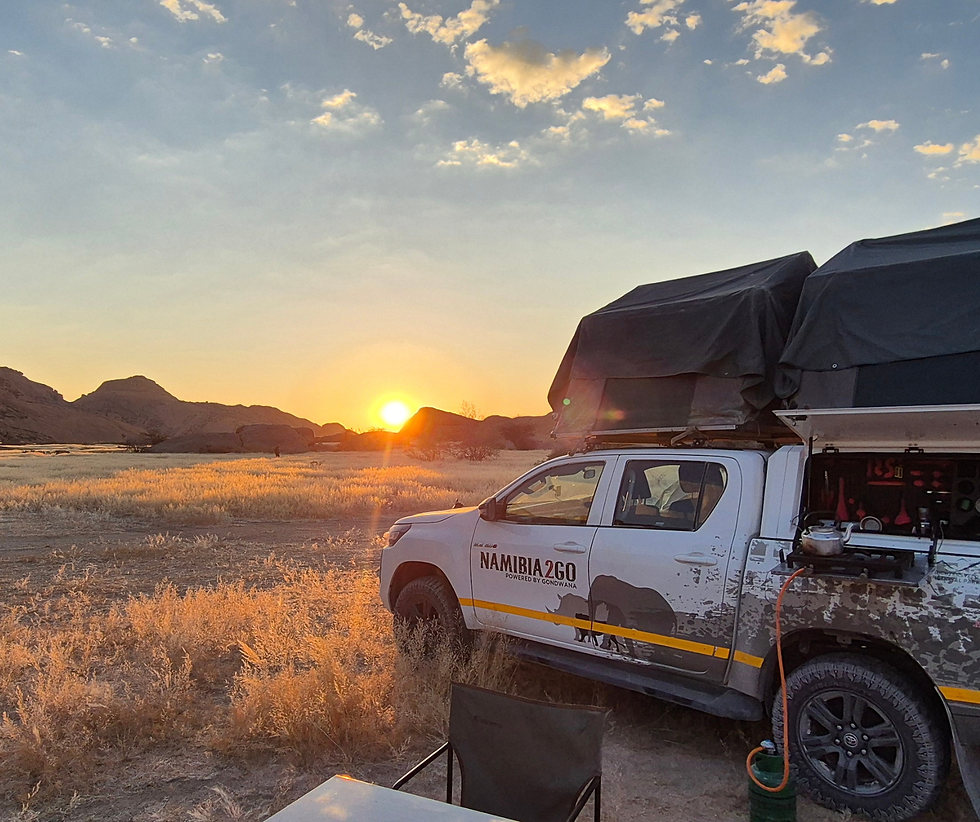
At its heart overlanding is vehicle based adventure travel, but that description only tells part of the story. Instead of flying into a lodge, staying for a few days and then moving on by air, we travel through the landscape in fully equipped 4x4s. We might camp beside a river, in a wildlife area, somewhere surrounded by desert or in a place with an extraordinary history, and then a few days later move on to somewhere completely different.
That moving around is very important because it gives you a real sense of where you are. You begin to understand distances and how landscapes connect. You notice the gradual change from one environment to another rather than stepping off an aircraft into a completely different place.
On one journey you might wake beside a river, spend the morning watching animals around camp, drive through open bush the following day and then stop in a small town to refuel and buy supplies before heading towards a completely different landscape. There may be days when we cover a fair distance and others when the vehicles don't move at all.
One thing I have heard many times from participants is that they expected the driving to be something we simply had to do to reach the next destination. By the end of the trip many say the opposite. The drives, the stops, the conversations over the radio and the unexpected things seen along the way have become part of their favourite memories.
For anyone curious about the vehicles we use: Africa Overland Adventures – Vehicles.
It gives you a different view of Africa
One of the things I enjoy most about leading an overland journey is seeing people begin to appreciate the sheer scale of Africa. A gravel road through the Namib can be every bit as memorable as the campsite waiting at the end of it. The same can be true travelling through the Okavango Delta region, crossing wide open country or following a sand track through an area where there is barely another vehicle in sight.
Some of the best moments are completely unplanned. It might be an elephant appearing beside the road, a particularly beautiful place where we decide to stop for lunch, a conversation while buying supplies or simply pulling over because the view deserves more than just a passing glance.
Those moments are impossible to build into an itinerary because you do not know when they are going to happen but they do, every time...
It is an adventure, not a race
Most people very quickly settle into the rhythm of overlanding. We are not trying to drive as quickly or as far as possible. We travel sensibly, stop when there is something worth stopping for and make time to enjoy where we are. Southern Africa is enormous so some journeys inevitably include some longer driving days and they need to have a purpose. They take us to the places where we can then slow down, stay for a while and enjoy being there.
Quite often, the day that looked like a “long driving day” on the itinerary turns out to be one of the days people talk about afterwards.

It is not extreme off-roading
The vehicles we use are very capable 4x4s for a reason. Depending on the journey we may encounter gravel, deep sand, corrugations, mud, water crossings or rough tracks. But I have never believed in making a route difficult simply for the sake of it. We are not looking for the deepest mud hole or the hardest obstacle to see whether we can get through it. If challenging terrain is genuinely part of reaching somewhere special, then it can be great fun and a memorable part of the journey. The aim is always to travel responsibly and look after the vehicles, the environment and everyone travelling with us. People sometimes arrive slightly nervous about driving a 4x4, particularly if they have never driven one before. What I have seen time and again is how quickly that confidence grows. With sensible guidance everyone generally settles into the vehicles surprisingly quickly and often complete the journey having enjoyed the driving far more than they expected.
Who is overlanding ideal for? Ideal For | Africa Overland Adventures
It is more than a safari
Wildlife is often a major part of what brings people to Africa, and I think it definitely should be, and many of the encounters we have had on our journeys have been extraordinary. But overlanding gives you something broader than a conventional safari holiday.
Rather than flying between lodges and joining scheduled game drives, you experience the country connecting those places. Wildlife may be part of one day and a desert, mountain range, coastline, village, border crossing or vast empty road may be part of the next day.
And wildlife does not only appear during a designated game drive. Some of the best sightings happen unexpectedly while travelling between camps, while preparing breakfast, or even while sitting with a cup of tea or a glass of wine at the end of the day.

Comfort matters but this is still an outdoor adventure
People taking part in our journeys sometimes worry they need to choose between adventure and comfort. In reality overlanding sits somewhere in between. You do need to be somewhat practical, vehicles space is limited, so soft luggage and sensible clothing make life much easier than trying to travel with everything you might take to a hotel. There will probably be some dust, a few early starts, very warm afternoons and perhaps cooler evenings than you expected but that does not mean every day is uncomfortable. Many of the camps we use have very good ablution facilities, and there are few things more satisfying than a hot shower after a dusty day on the road. At other times you realise that sitting outside beneath an enormous African sky, next to a fire, with a drink in your hand feels more luxurious than anything you could find in a hotel.
I have also found that people generally bring far more specialist kit than they need. Comfortable clothing, practical shoes, good sun protection and something warm for the evening will take you a very long way.
Not every day follows the script
You can plan an overland journey carefully, and we do, but Africa occasionally has other ideas. Weather changes, road conditions change and wildlife certainly does not consult our itinerary. A road that looks straightforward on the map can become slower than expected. Something extraordinary can appear beside the track and delay us for all the right reasons.
I think one of the best things a leader can do in those moments is recognise when to stick with the plan and when not to. There is always a structure to the journey and destinations we need to reach, but there also has to be enough flexibility to allow the trip to breathe and flex.

The group becomes part of the experience
Perhaps the part of overlanding that has surprised me most over the years is how important the shared experience becomes. People may be travelling in separate vehicles, but they are sharing the same road, camps, sunsets, wildlife encounters and adventures. Somebody spots something and calls it over the radio, someone finds a particularly good place to stop, someone puts the kettle on when we arrive in camp and without fail, somebody seems to know exactly where the best biscuits or snacks are hidden.
Generally people help each other without making a great fuss about it. Conversations happen around camp that probably never would have happened in a hotel dining room, and by the end of a journey, a group of people who may have barely known each other at the start have accumulated a collection of shared experiences.
You do not need to be an explorer
When people see photographs of 4x4s crossing remote African landscapes it is easy to assume you need to be an experienced adventurer to take part. You do not. You do not need to know how to rebuild an engine beside the road, own a wardrobe of expedition clothing or have spent years driving through deserts. What helps far more is curiosity, patience, a sense of humour and the willingness to accept that not everything has to happen exactly as expected.
I have travelled with many people who began their journey unsure whether overlanding was really for them and finished already talking about where they might go next, either on their own or with us again, and often this is because they discover that adventure does not need to mean hardship.
Kit and clothing information: Kit & Clothing | Africa Overland Adventures
What overlanding has taught me
After leading these journeys and listening to the people who travel with us, I think the greatest thing overlanding gives you is a sense of perspective. It slows travel down enough for you to understand where you are and a line on a map becomes a collection of places and experiences. You remember the elephant beside the road, the campfire conversation, the seemingly endless horizon, the dusty shoes, the hyena skulking around the campsite, the rough section of track everyone talked about afterwards and that first cup of coffee quietly watching the sunrise and listening to the birds sing.
You certainly come home with photographs of the places you visited which are great but what stays with you is often how we got to where we were going...
Angus


Comments